


Starting an Agricultural or Forestry Contracting Business in Ireland 2026
Gross is not the same as net, and revenue is not the same as profit!
Agricultural and forestry contracting businesses are technical service providers in rural areas throughout Ireland. Customers from agriculture and forestry, as well as from the Government and local authorities, and other sectors, expect modern, reliable machinery, skilled and qualified personnel, with extensive expertise when their work is being carried out.
Many, especially enthusiastic agricultural machinery fans, think this is not a problem when considering starting an agricultural or forestry contracting business. But behind the colourful world of agricultural and forestry machinery videos and brochures, lies a demanding business that requires not only technical and professional qualifications, but, above all, strong management skills.
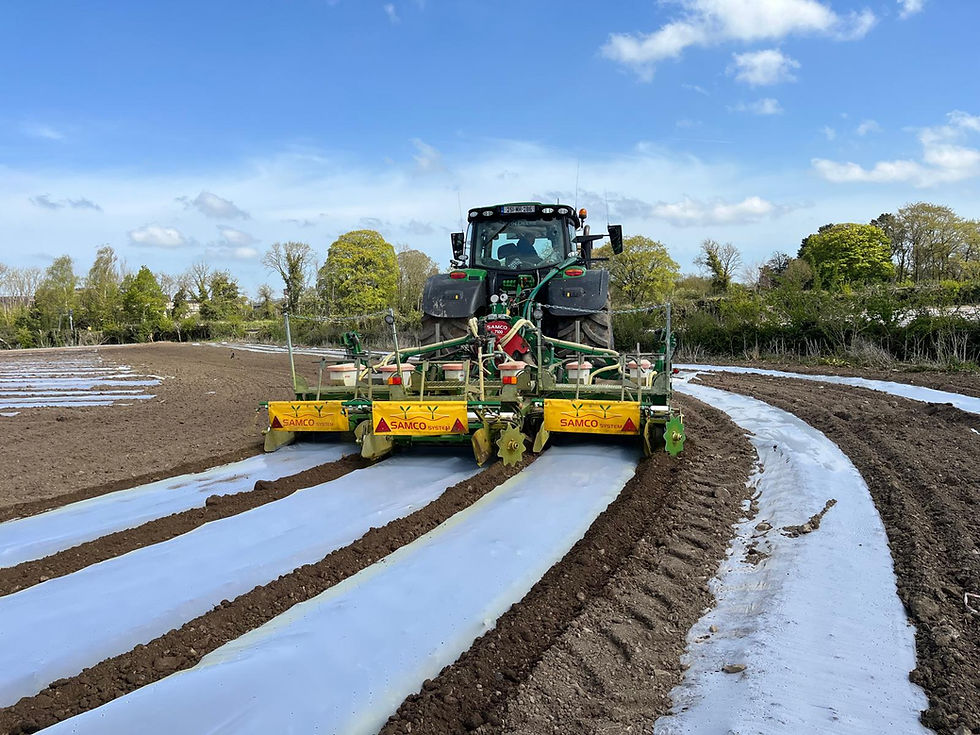
For many young people modern agricultural or forestry technology holds great fascination. Powerful tractors and sophisticated machines for field cultivation, fertilization, harvesting, and forestry are efficient and precise, but they are also expensive. Accordingly, a year-round job in a modern agricultural or forestry contracting business can trigger investments of up to €1 million. Poor business planning can therefore “cost a lot of money” and have a lasting impact on both your professional and private life.
This brief FCI overview provides some basic information for those interested in starting an agricultural or forestry contracting business.
In Ireland, the agricultural and forestry contracting sector generates approximately 85% of its annual revenue from agriculture and forestry. About 15% of revenue is generated primarily through local authority services, and also from work for commercial and private non-farming clients.
Agriculture:
The agricultural sector is well to very well supplied with agricultural machinery. In Ireland, more than 1,500 contracting farming companies and sole traders, offer their services as a supplement to, but also as an alternative to, self-mechanization in agriculture. The number of farms, currently around 130,000, is decreasing by about 2% annually. Most farms fall victim to structural change, meaning they are abandoned due to the owners' retirement. Strong price and quantity fluctuations in agricultural markets can also trigger the economic collapse of a farm business.
The land area of Ireland is 6.9 million hectares, of which 4.3 million hectares is used for agriculture or about 62% of total land area, and 724,000 hectares for forestry or about 10.6% of total land area. Furthermore, agriculture loses in the region of 500 hectares of valuable farmland every week (CSO Studies) – in other words, two combine harvesters or one forage harvester become "unemployed" in Ireland every week!
Agricultural services are therefore a highly competitive market with significant challenges and serious risks!
Local Authorities:
In the Local Authority sector, the conditions are comparable to those in the agricultural sector. Here, too, cities and towns have a vested interest in employing their own personnel and equipment capacities to the best of their ability. This not only presents risks but also opportunities for contracting companies, particularly those specializing in the maintenance and upkeep of public areas and facilities. In these cases, the level of manual labour can be more significant. Limited winter services in Ireland require a contractually agreed-upon standby fee and adequate compensation for services rendered through the e-tender process.
Other Work Opportunities:
Contracts for commercial or private clients can be an attractive supplementary income for agricultural and forestry contracting companies, provided they can be carried out using existing machinery, ideally outside of peak agricultural seasons. Continuous utilization of personnel and equipment is rare but is certainly possible.
Profitability:
Competition between agricultural contracting companies and farmer customers' own machinery inevitably leads to some market consolidation, leaving only the most profitable businesses with a chance to survive. A precise and local market assessment must be conducted before any investment in machinery is made.
A key metric for evaluating profitability is revenue (operating income). Agricultural contracting companies are commercial enterprises, and therefore, revenue and VAT returns must be regularly settled with the office of the Revenue Commissioners. From the remaining net revenue, the costs for machinery (depreciation, interest, insurance, repairs, energy), personnel (wages and salaries, social security contributions), and operating expenses (building, office, management, consulting) must be covered.
Operating expenses should not be underestimated: mandatory book-keeping and tax consulting alone, as well as a company car, 4x4 or van, can quickly cost several thousand euros per year. Even a small office with minimal equipment (telephone, PC with internet access, printer, etc.) and consumables (paper, postage, etc.) incurs significant financial costs.
It is important that a practical approach to operational risk must be included in any agricultural or forestry contractor business plan. This is because complaints regarding work that was actually or allegedly not carried out properly and payment defaults from slow payers or insolvent customers are part of everyday life for contractors.
With a full consideration of all costs, a company profit return of between 5% and 10% is possible. This profit level is relatively small, but generally stable. It can be just about adequate to build equity capital and support the longer term business growth.
Cost structure in contract harvesting businesses - Values depending on company revenue
Machine costs, energy, repairs, depreciation (loss of value), interest 45-55%,
Personnel costs (incl. operations manager), wages and salaries,
social security 20-30%;
Business expenses, business equipment, telephone, accounting, etc. 10 - 20%
Total 90 - 95%
In a real world example of agricultural contracting, the calculation could look like this:
A new contractor entrant purchases a used combine harvester for €200,000. This is used annually to harvests 250 hectares for rapeseed and grain. The machine, personnel, and business costs add up to €185/ha. The contractor charge (revenue) for contract harvesting is €200 plus VAT per hectare.
In this example, the contractor retains €15 per hectare of harvested area and approximately €3,750 annually from the total contract harvesting.
If the business owner operates the combine harvester himself/herself, he/she can also claim personnel costs, which amount to an additional €2,500 per harvest season. However, this figure must be adjusted to account for the time spent harvesting itself, traveling to and from the customer, preparing and cleaning the machine, and handling organizational tasks (scheduling, invoicing, etc.), which can easily add up to 250 hours per harvest season.
This results in a wage of €25 per hour for the work performed, from which social security contributions, taxes and compulsory pension payments must also be paid.

Some Rules of Thumb for Agricultural Contracting Businesses:
Minimum revenue for one full-time employee: €180,000/year
Minimum annual revenue when investing in agricultural machinery as a percentage of the investment sum:
Combine harvester 20 to 25%
Forage harvester 30 to 35%
Self-propelled slurry tanker 30 to 35%
Trailing Shoe slurry tanker 15 to 20%
Silage Trailer 15 to 20%
Business start-up:
Starting an agricultural contracting business is relatively straightforward. VAT registration takes place with the Revenue Commissioners, stating the business purpose. After receiving the company tax identification number, regular contact with the tax office begins. There are monthly or quarterly VAT returns needed, tax statements for the financial year, and the subsequent payment of taxes (corporation tax for a limited company and income tax, etc.) are required.
Market access:
The more formal barriers for starting an agricultural contracting businesses exist in the form of some accepted agricultural training to understand "good agricultural practice," such as proof of expertise in crop production (plant protection) or quality assurance and sprayer certification systems. The qualifications are more exact and widespread in forestry services (PEFC, FSC) and are therefore regularly required of contractors by private and public forest owners.
If you need to include a commercial transport of goods aspect to your proposed business, then you may need to seek a haulage licence which can present an additional significant operational and financial hurdle. These may mean that a Class CE driver's license must also be considered.
It is strongly recommended that those starting a business have relevant training or several years of experience in the service sector. Agricultural and forestry contracting is only for professionals, and financial reserves can be quickly depleted. Opportunities and prospects always exist but must be carefully explored.
Common Mistakes:
Typical mistakes when starting an agricultural or forestry contracting business are as follows:
• Overly optimistic revenue projections;
• Incorrect calculation of operating costs and correspondingly low labour rates;
• Failure to properly account for the depreciation of machinery;
• Inadequate valuation of one's own labour and the company's premises;
• Financing with one or more interest-only years: What is "saved" in the first few years must be "added" or generated additionally in subsequent years;
• Labour rates that are too low = insufficient revenue = no profit in the medium term!
Talk to us – we know that it's worth it!
The Association of Farm and Forestry Contractors in Ireland (FCI) and its team are available for consultation and support for aspiring agricultural and forestry contractors. If necessary, contact can also be established with existing companies seeking a successor.
Association of Farm & Forestry Contractors in Ireland,
Portlaoise Enterprise Centre, Clonminam Business Park, Portlaoise, Co Laois, R32 D611.
Tel: 087-7551111 Email: info@farmcontractors.ie
Website: www.farmcontractors.ie


Comments